Last updated: April 2026
CRYPTO BOOKKEEPING · RECONCILIATION · LEDGER · ALL CHAINS

Crypto Bookkeeping & Reconciliation

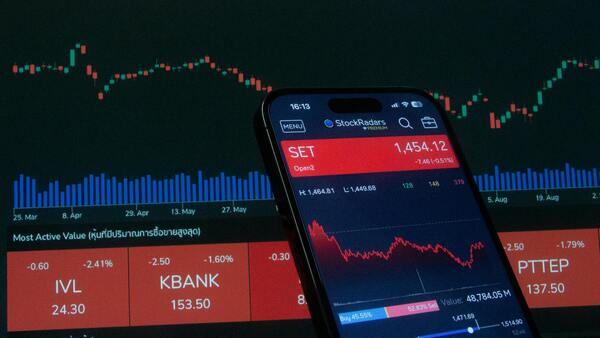
Stock market trading screen closeup — Crypto Bookkeeping & Reconciliation

Complete transaction reconciliation across all wallets, exchanges, and DeFi protocols. Daily or monthly close, FIFO/LIFO/HIFO/ACB cost basis by jurisdiction, and seamless integration with QuickBooks, Xero, and NetSuite for a complete general ledger.
At a Glance
TransactionsUnlimited
WalletsAll major chains
Exchanges300+ API integrations
Cost basisFIFO, LIFO, HIFO, ACB
Stock trading app smartphone — Crypto Bookkeeping & Reconciliation

What Crypto Bookkeeping Involves

Crypto bookkeeping starts with data acquisition: connecting to every exchange via read-only API, adding wallet addresses for on-chain tracking, and importing any CSV exports from exchanges that don't offer APIs. The goal is complete transaction capture — every trade, transfer, fee, reward, and DeFi event from every source, with no gaps.

Once transactions are imported, each must be classified: is this a buy, sell, transfer between own wallets, income event (staking, mining, airdrop), fee, or DeFi interaction? Classification rules are configured based on your specific activity patterns. Wallets tagged as "own" generate no gain/loss on transfers between them; wallets tagged as "exchange" trigger reconciliation checks against exchange records.

Chart of accounts setup ensures crypto assets are correctly categorised on your balance sheet: typically as intangible assets (IFRS/UK GAAP) or as a separate crypto asset category (US GAAP post-ASU 2023-08). Cost of sales, realised gains/losses, and income from staking/mining are tracked in separate P&L accounts for clear reporting.

Monthly close produces: a reconciled balance sheet (all crypto holdings at period-end, valued at cost or fair value per your standard), a P&L showing realised gains/losses and income events, a detailed transaction listing for review, and management accounts ready for board reporting or regulatory submission.

What Makes Crypto Bookkeeping Complex

The complexity of crypto bookkeeping scales dramatically with DeFi activity. A simple trading portfolio on two exchanges is straightforward — automated tools handle 99% of the work. A DeFi-heavy portfolio across 10+ protocols on 5+ chains with daily yield, LP positions, and governance token farming can require hours of manual review per month.

Activity Type Complexity Key Challenge Tool Support
Spot trading (CEX)LowVolume, API reliabilityAutomated
Staking rewardsLow–MediumFMV at each reward eventMostly automated
DeFi liquidity poolsHighLP token accounting, IL trackingPartial automation
Wrapped tokensMediumMay trigger disposal in some jurisdictionsPartial automation
Cross-chain bridgesMediumDebit on chain A, credit on chain BManual review
NFTsMedium–HighIndividual cost basis, royaltiesLimited automation
Yield farming / rebasingVery HighContinuous income events, token mechanicsMostly manual

Cost Basis Accounting Methods by Jurisdiction

The cost basis method used to calculate gains and losses affects both your tax liability and your financial statements. Different jurisdictions mandate or permit different methods — using the wrong one creates compliance risk.

Method Description Jurisdictions Tax Impact
FIFO (First In, First Out)Oldest holdings sold firstUS (allowed), most EU countries, CanadaHigher gains in bull markets
LIFO (Last In, First Out)Newest holdings sold firstUS (allowed, not permitted in many countries)Lower gains in rising markets
HIFO (Highest In, First Out)Highest cost basis sold firstUS (allowed as specific ID)Minimises gains — tax-efficient
ACB (Adjusted Cost Base)Average cost of all holdingsCanada (mandatory)Blended cost, predictable
S104 Pool + Same-Day + 30-DayUK pooling rulesUK (mandatory)Anti-bed-and-breakfasting rules
Average CostRunning averageGermany, many EU countriesSmooth gains recognition

Tools & Software We Use

We work with all major crypto accounting platforms and connect them to traditional accounting software for a complete general ledger. Tool selection depends on your size, activity type, and reporting requirements.

  • Koinly: Best for individuals and SMEs. Supports 300+ exchanges, 50+ blockchains, all major cost basis methods. Direct Xero and QuickBooks integration. Affordable pricing.
  • Cryptio: Enterprise-grade. Full IFRS support, multi-entity consolidation, ERP integrations (NetSuite, SAP), dedicated account manager. Used by major exchanges and institutions.
  • Bitwave: Best for DAOs, corporate treasury, and companies needing multi-entity ERP integration. Strong US GAAP support, native NetSuite and QuickBooks integration.
  • Lukka: Institutional crypto accounting for funds and custodians. Full audit trail, SOC 2 certified, supports complex fund structures and custodial arrangements.
  • QuickBooks / Xero integration: Journal entries from all platforms push automatically to your traditional GL, keeping payroll, fiat banking, and crypto in one system.

Our Monthly Close Process

Our standard monthly close process ensures your books are accurate and ready for management review within 5 business days of month-end. For clients needing faster close (e.g., fund NAV), we offer weekly or daily close services.

  • Day 1–2: Sync all exchange and wallet data; flag any API failures or missing data for manual import
  • Day 2–3: Review and classify unclassified transactions; resolve DeFi parsing issues
  • Day 3: Calculate month-end balances; verify against on-chain data and exchange statements
  • Day 4: Post month-end journal entries; calculate unrealised gains/losses per accounting standard
  • Day 5: Prepare management accounts pack; deliver to client for review
  • Day 6–7: Incorporate client review comments; finalise and close the month

Crypto Bookkeeping by the Numbers

847
Average transactions per portfolio annually
12
Blockchain networks requiring tracking
31
Days average reconciliation time (manual method)
4.2
Hours required with automated API integration
68%
Of Swiss crypto holders requiring DeFi position tracking
15
Cost basis methods recognized by ESTV (2026)

Crypto Bookkeeping Cost Breakdown

Initial Portfolio Setup & Data Acquisition
API connections, wallet import, historical data reconciliation
CHF 1,200
Monthly Automated Reconciliation (0–500 transactions)
Real-time API sync, exchange monitoring, fee classification
CHF 280
DeFi Position Tracking (per protocol)
Yield farming, LP rewards, governance tokens, staking
CHF 150
Cost Basis Method Consultation & Application
FIFO/LIFO/ACB selection, ESTV compliance review, tax optimization
CHF 850
Annual Tax Report Generation & Validation
Cantonal tax authority formatting, gain/loss summary, audit trail
CHF 620
Multi-Chain Ledger Export (quarterly)
Consolidated ledger across Ethereum, Polygon, Solana, Arbitrum, Optimism
CHF 180
Total Annual Cost (Standard Portfolio)
Setup + 12 months reconciliation + tax reporting
CHF 5,810

Frequently Asked Questions

The correct method depends on your jurisdiction. The US (IRS) allows FIFO, LIFO, HIFO, and specific identification — HIFO minimises gains if you have a diverse cost basis. The UK mandates the Section 104 pool method with same-day and 30-day bed and breakfasting rules taking precedence. Germany and most EU countries use FIFO or average cost. Canada uses Adjusted Cost Base (ACB). We configure your bookkeeping software to apply the jurisdiction-correct method.
Missing history is common when clients have used exchanges that no longer exist (e.g., FTX), lost API access, or traded before keeping records. We use blockchain explorer data (on-chain transactions are permanent), third-party data aggregators, and price databases to reconstruct as much history as possible. Where data is genuinely unavailable, we document the gap and apply a supportable estimation methodology, which we disclose in financial statements.
Yes. DeFi transactions require protocol-specific classification rules. Liquidity provision creates LP tokens (asset exchange treatment), yield farming generates income (recognised at FMV), and bridge transactions are wallet-to-wallet transfers. NFTs are tracked individually with purchase cost, subsequent sales, and royalty income. We use Cryptio and Bitwave which have automated DeFi parsing for major protocols, supplemented by manual review for novel interactions.
Setup typically takes 1–3 weeks depending on the number of exchanges and wallets, the volume of historical transactions, and how far back you need history. API connections are established on day one. Historical data import and classification usually takes 1–2 weeks. For entities with years of complex DeFi history, onboarding can take 4–6 weeks. Once set up, monthly close is typically 3–5 business days.
Yes. Most crypto accounting platforms (Cryptio, Koinly, Bitwave) have direct integrations with QuickBooks Online, Xero, and NetSuite. Journal entries from crypto activity are pushed automatically to your traditional accounting software, keeping your full general ledger in one place. We configure these integrations as part of onboarding so your month-end numbers flow seamlessly.
We offer tiered pricing starting at CHF 500/month for portfolios under 500 transactions annually, scaling to CHF 2,500/month for high-volume traders. Most clients pay a hybrid model combining a monthly retainer with per-transaction fees for complex trades like staking rewards or yield farming at CHF 2-5 per transaction. All pricing includes quarterly tax position reports and full documentation for Swiss tax authorities.
We recommend monthly data uploads to maintain accurate cost basis and real-time tax position tracking, though quarterly reporting is acceptable for lower-activity accounts. If reporting gaps occur, we can reconstruct transactions from blockchain records or exchange APIs, but delays beyond 90 days may incur retroactive fees of CHF 200-400 and increase audit risk with FINMA or cantonal tax offices. For 2026, Swiss tax authorities increasingly expect monthly reconciliation for regulated crypto businesses.
Initial setup requires your exchange API keys (read-only), wallet addresses, and incorporation documents if operating as a business entity. For tax audits by Swiss cantonal authorities, you must retain original purchase receipts, exchange statements, wallet transaction records, and our generated cost basis reports for seven years as per Swiss tax law. We provide audit-ready documentation packages in both German and English formats.
We prepare all documentation according to Swiss Federal Tax Administration (FTA) guidelines and cantonal requirements, though we do not file directly with FINMA or tax offices—that responsibility remains with you or your accountant. Our reports classify transactions according to 2026 Swiss tax treatment (private wealth vs. professional trader status) and flag reportable events like significant gains or staking income. We recommend annual consultation with a tax advisor to finalize your tax return based on our prepared data.
We provide complete data exports in CSV, Excel, and PDF formats within 5 business days at no charge, and your historical cost basis records and transaction logs remain your property. All data can be imported into competitors' systems or standard accounting software, though timeline delays of 2-3 weeks are typical when transferring between providers due to validation processes. We do not impose lock-in periods or penalties for switching.
We conduct monthly reconciliation between your reported transactions and blockchain records, flagging discrepancies within 10 days so you can investigate missing or duplicate entries. While we verify transaction authenticity and amounts, you remain responsible for ensuring all trades are disclosed—we are not liable for intentional omissions or fraudulent reporting you provide. In cases of genuine data conflicts, we recommend involving your exchange support or a blockchain forensics firm before finalizing tax reports.
Swiss banking regulations under the Banking Act require clear documentation of all crypto transactions and their conversion to CHF or other fiat currencies, which our bookkeeping services fully support. While we do not directly interface with banks, our reports are designed to satisfy banking due diligence requirements at institutions like Sygnum, Maerki Baumann, and other Zug-based crypto-friendly banks that require transaction transparency. As of 2026, FINMA expects regulated banks to request monthly reconciliation statements from clients holding significant crypto positions.
Practitioner Insight

Practical Licensing Insight

Based on CryptoLicenses.net consulting data, 2024-2026

MH
Senior Licensing Consultant · LL.M. International Financial Law
22 years in financial services regulation. Advised 400+ crypto licensing mandates across 60+ jurisdictions. Based in Zug, Switzerland.
Free Consultation

Ready to Get Licensed?

Tell us about your project and we'll identify the right jurisdiction, outline the requirements, and give you a realistic cost estimate — at no charge.

  • 🇨🇭 Swiss-registered firm, Zug
  • ⚡ Response within a few hours
  • 🔒 Strictly confidential
  • ✓ 80+ jurisdictions covered

Confidential · No obligation · No spam